
International Dengue Day
In light of International Dengue Day, we believe it is necessary to provide some
details about this disease.
What is dengue fever?
It is a viral disease caused by the virus of the same name and transmitted by mosquitoes,
mainly Aedes aegypti.
What are the characteristics of this mosquito?
Aedes aegypti has different stages of development: eggs, larvae, pupae (stages that occur in water), and adult mosquitoes (when they can fly). They breed in shady, humid places. Any container capable of accumulating water can become a breeding ground, but some can produce large numbers of mosquitoes. For example, car covers are excellent places for these insects to develop, due to their shape (which prevents water from spilling), their material (insulating) and their dark color, which allows them to maintain the right temperature. However, other objects inside our homes can also be breeding grounds, such as vases, plant pots, or pet water bowls. Therefore, this mosquito can also breed in an apartment.
What are the clinical symptoms of the disease?
The symptoms are:
- Fever accompanied by one or more of the following symptoms:
- Pain behind the eyes, headache, muscle pain, and joint pain
- Nausea and vomiting
- Intense fatigue
- Appearance of spots on the skin
- Itching and/or bleeding from the nose and gums
- If you experience these symptoms, you should go to a health center immediately to receive
appropriate treatment. - It is important to avoid self-medication.
What is the situation in our country?
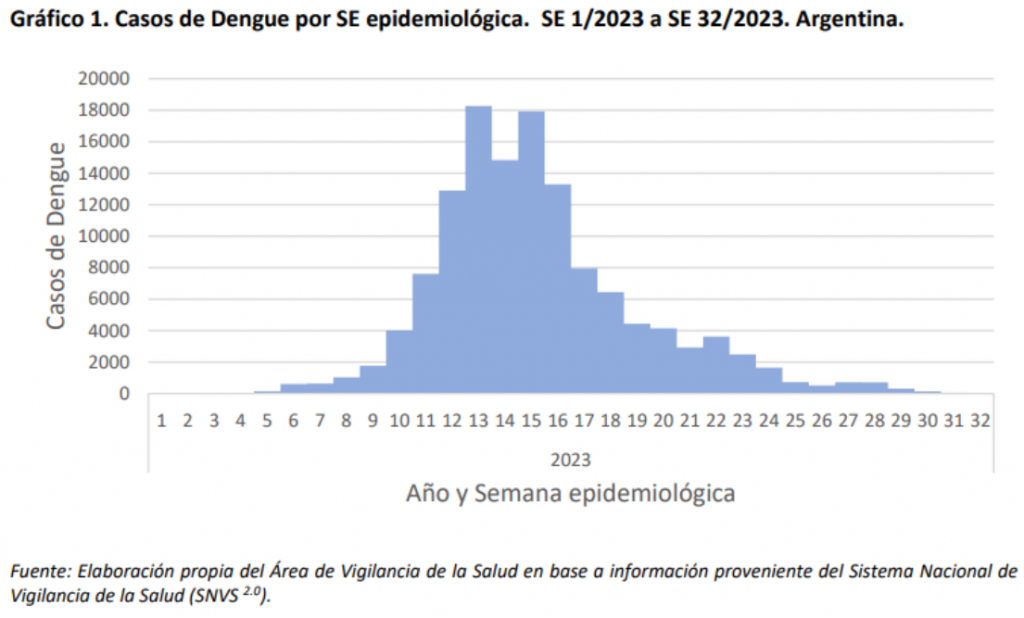
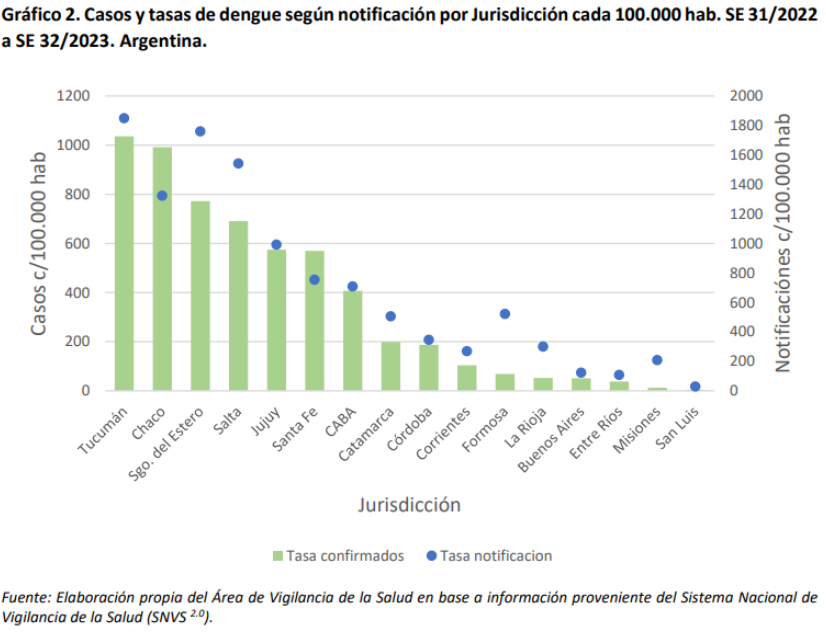
Dengue is a disease that, although it occurs every year, tends to cause epidemic outbreaks every 3 or 4 years. 2023 was a year with a large number of cases. The disease occurs in summer and affects the central and northern provinces of our country, with no indigenous cases in Patagonia. According to data presented by the Ministry of Health, as of week 32/2023, there were 129,972 cases of dengue fever in Argentina: 121,424 indigenous, 1,499 imported, and 7,049 under investigation. Only 18,727 cases were confirmed by laboratory tests. There were 115 reports of dengue in the last week, of which 16 correspond to laboratory-confirmed cases belonging to week 32.
Is there anything we can do to prevent this?
Preventing this disease is possible:
- Eliminating all unused containers that can accumulate water
(such as cans, bottles, tires). - Turn over any objects outside that can
collect water when it rains (buckets, basins, drums, bottles). - Change the water in animal drinking troughs, drain collectors from
air conditioning or rain, inside and outside the house, every 3 days. Remember
to scrub the walls of the containers with a sponge or brush in order to
remove any mosquito eggs that may be stuck to them. - Filling vases and planters with damp sand.
- Keeping patios and gardens clean, tidy, and weed-free.
- Cleaning gutters and rain drains from roofs.
- Covering tanks and containers used to collect water.
- It is also important to prevent mosquito bites:
- Always use repellents carefully following the recommendations
on the packaging. - Wear light-colored clothing that covers your arms and legs, especially
during outdoor activities. - Install mosquito nets on doors and windows, and whenever possible, use
fans or air conditioning in rooms. - Protect cribs and strollers with mosquito netting.
- Use environmental repellents such as tablets and coils.
Dr. Daniel Pryluka.
MN: 69246
Head of Infectious Diseases
Medical Center